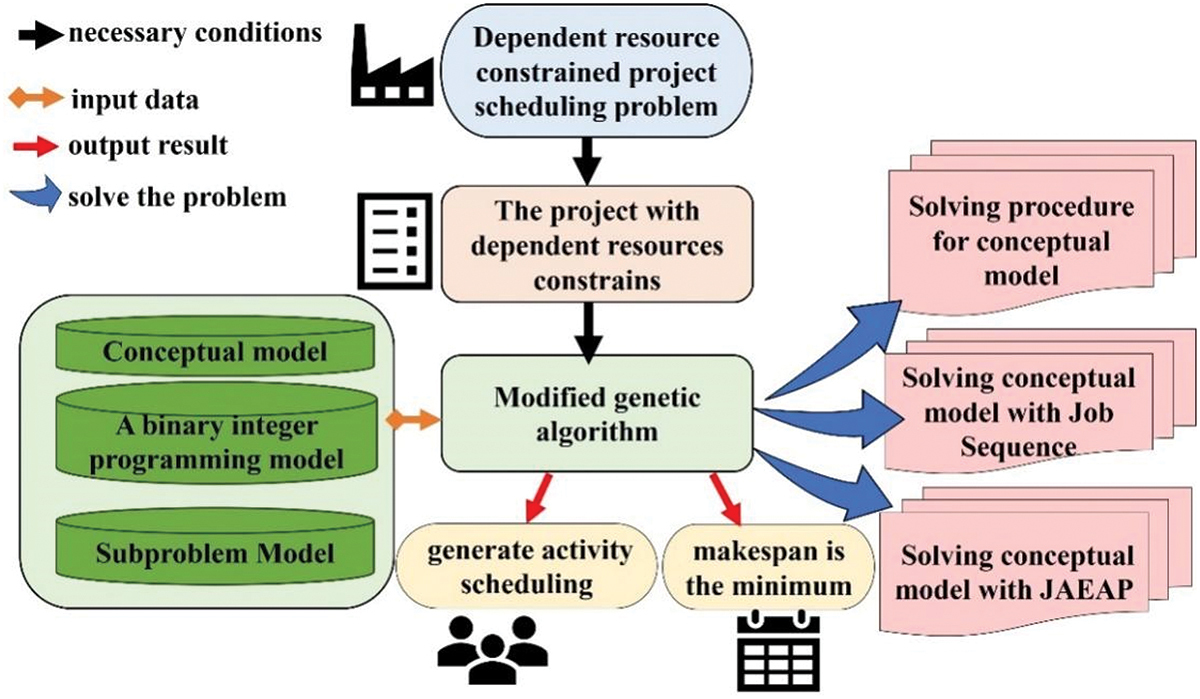
Production planning often feels like conducting a grand orchestra. Each instrument represents a resource, every musician comes with limitations, and the conductor must harmonise them without a single note going out of tune. Constrained optimization modelling becomes the conductor’s baton, guiding the tempo, sequencing the performers, and ensuring that the symphony of resources creates a smooth and profitable performance for the organisation. Many learners discover this orchestration mindset when exploring frameworks introduced in a ba analyst course, which helps them see production constraints as components of a well crafted system rather than isolated problems.
The Invisible Strings That Shape Production Decisions
In any manufacturing environment, constraints act like the hidden strings of a puppet show. They tug gently yet firmly, setting boundaries on what is possible. Labour hours, machine capacity, raw material availability, transportation schedules, and customer demand all operate as strings that influence movement. A planner cannot simply pull one string harder because it affects the shape of the entire performance. Solver techniques such as linear programming, integer optimization, and mixed constraint models help decision makers translate these invisible strings into measurable relationships. By doing so, production output is no longer guesswork but a structured choreography that respects limitations and maximises efficiency.
Transforming Complexity Into Mathematical Rhythm
Constrained optimization techniques transform messy, multi layered decisions into elegant mathematical rhythm. The real artistry lies in expressing a real world challenge as a model with objective functions and constraints. When a planner specifies a goal such as profit maximisation or cost minimisation, solvers begin exploring numerous combinations of resource usage. They identify the best feasible path that honours every restriction placed on the system. This is why concepts from a business analysis course frequently emphasise modelling finesse. The ability to translate ambiguity into precise equations becomes a valuable skill that elevates problem solving beyond intuition.
How Solvers Imitate Human Intuition With Mathematical Precision
Although solvers operate in mathematical environments, they mimic a form of structured intuition. They evaluate thousands of production outcomes quickly, test alternatives, eliminate inefficient combinations, and surface the most promising plan. While humans can sense when a plan feels impractical, solvers quantify that feeling with data driven clarity. They detect bottlenecks, measure opportunity costs, and reveal hidden trade offs that may not be visible at a glance. This blend of intuition and precision allows organisations to respond gracefully to fluctuating demand, supply chain disruptions, or cost pressures.
In many organisations, decision makers who have experienced a ba analyst course learn to treat solvers as collaborative partners rather than cold mathematical tools. This mindset speeds up production planning conversations and encourages cross functional teams to adopt analytical decision frameworks that reduce confusion and conflict.
The Art of Balancing Profit, Capacity, and Time
Production planning is rarely about a single objective. It is an intricate balance between profit, capacity, time, quality, and risk. Solvers excel at balancing these competing forces. They convert a planner’s priorities into optimisation targets. For example, if a company needs to increase output without adding overtime, a constraint can cap labour hours. If inventory storage is limited, a solver incorporates maximum capacity levels. If demand is uncertain, models can add safety buffers. This balancing act resembles a potter carefully shaping clay on a spinning wheel. The potter must push, pull, or adjust the clay with precision so that the final form holds its shape. Similarly, solvers help organisations shape production plans that can withstand operational pressures without collapsing under constraints.
Learners in a business analysis course often discover how constraint modelling improves communication with stakeholders. Instead of debating assumptions subjectively, teams rely on clearly articulated constraints and data backed decisions that create alignment.
Building Resilient Production Systems Through Optimization Thinking
The true power of constrained optimization lies not just in solving today’s scheduling puzzle but in shaping a long term culture of resilience. Organisations that embrace solver driven planning develop a habit of questioning resource usage, measuring opportunity costs, and exploring alternative scenarios. They create adaptive production systems that can survive uncertainty without unnecessary stress. When unexpected challenges arise, solvers allow decision makers to recalibrate quickly and find new feasible paths.
This resilience mindset is one of the key outcomes emphasised in a ba analyst course, where learners recognise that optimisation is not a one time solution but a disciplined thinking approach that strengthens operational efficiency across the organisation.
Conclusion
Constrained optimization modelling acts as a bridge between strategic ambition and operational reality. By treating production planning as an orchestrated performance, solvers guide organisations to allocate resources intelligently, balance competing demands, and convert complexity into clarity. Through structured modelling, companies achieve greater profitability, improved efficiency, and stronger resilience in the face of uncertainty. As industries continue to evolve, solvers will remain essential tools that help decision makers design production plans that are both practical and visionary.
Business Name: Data Analytics Academy
Address: Landmark Tiwari Chai, Unit no. 902, 09th Floor, Ashok Premises, Old Nagardas Rd, Nicolas Wadi Rd, Mogra Village, Gundavali Gaothan, Andheri E, Mumbai, Maharashtra 400069, Phone: 095131 73654, Email: elevatedsda@gmail.com.